During early pregnancy, many expectant parents are offered screening tests to assess the likelihood of certain chromosomal conditions in their baby. Two of the most common options are non invasive prenatal testing (NIPT) and first trimester screening.
While both are screening tools rather than diagnostic tests, they differ significantly in accuracy, method, timing, and scope. Understanding these differences can help you feel more confident when discussing options with your healthcare provider or ultrasound clinic on the Gold Coast.
This article explains how each test works, who they are recommended for, and how to decide which option may be appropriate for your pregnancy.
What Is Non Invasive Prenatal Testing (NIPT)?
Non invasive prenatal testing, sometimes referred to as non invasive prenatal diagnosis, is a blood test performed during pregnancy that analyses fragments of fetal DNA circulating in the mother’s bloodstream.
NIPT can be performed from 10 weeks of pregnancy onwards and is currently the most accurate screening test available for common chromosomal conditions.
What Conditions Does NIPT Screen For?
NIPT primarily screens for:
- Trisomy 21 (Down syndrome)
- Trisomy 18 (Edwards syndrome)
- Trisomy 13 (Patau syndrome)
Some NIPT options may also screen for sex chromosome variations, depending on the specific test used.
Accuracy of NIPT
NIPT has a detection rate of over 99 percent for Down syndrome, with lower false-positive rates compared to traditional screening methods. This high accuracy has made noninvasive prenatal testing on the Gold Coast increasingly popular, particularly for parents seeking early reassurance.
However, it is important to note that NIPT is still a screening test, not a diagnostic one. A high-risk result does not confirm a condition and should be followed by diagnostic testing such as chorionic villus sampling (CVS) or amniocentesis if recommended by your doctor.
What Is First Trimester Screening?
First trimester screening is a combined screening approach that assesses the risk of chromosomal conditions using two components:
- A blood test measuring specific pregnancy-related hormones
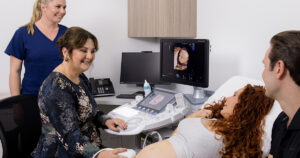
- A specialised ultrasound measuring nuchal translucency (the fluid at the back of the baby’s neck)
This screening is typically performed between 11 and 13 weeks of pregnancy.
What Conditions Does First Trimester Screening Assess?
First trimester screening estimates the risk of:
- Down syndrome
- Edwards syndrome
- Patau syndrome
It may also provide early information about placental health and pregnancy development.
Accuracy of First Trimester Screening
First trimester screening is less accurate than NIPT, with detection rates of approximately:
- 85 to 90 percent for Down syndrome
False-positive rates are higher compared to NIPT, which can sometimes lead to unnecessary anxiety or further testing.
Key Differences Between NIPT and First Trimester Screening
Understanding the main differences can help clarify why one test may be recommended over another.
Accuracy
- NIPT: Higher accuracy, particularly for Down syndrome
- First trimester screening: Moderate accuracy with higher false-positive rates
Timing
- NIPT: From 10 weeks
- First trimester screening: Between 11 and 13 weeks
Method
- NIPT: Maternal blood test only
- First trimester screening: Blood test plus ultrasound
Cost
- NIPT: Generally higher out-of-pocket cost
- First trimester screening: Often partially Medicare-rebated
Which Test Is Right for You?
There is no single “best” option for everyone. The right choice depends on individual circumstances, including:
- Maternal age
- Family or genetic history
- Previous pregnancy outcomes
- Personal preferences regarding accuracy and early information
- Cost considerations
Some parents choose NIPT for its higher accuracy, while others prefer first trimester screening as an initial step, particularly when combined with early ultrasound assessment.
A GP, obstetrician, or sonographer can help explain which option aligns best with your pregnancy care plan.
The Role of Ultrasound Before NIPT
Before undergoing NIPT, many healthcare providers recommend an early ultrasound to:
- Confirm gestational age
- Check fetal heartbeat
- Identify multiple pregnancies
- Assess early anatomical development
A dedicated Pre-NIPT Scan can help ensure the test is performed at the correct time and that results are interpreted accurately. This scan also provides valuable early reassurance about pregnancy progression.
NIPT and Ultrasound Services on the Gold Coast
Access to high-quality imaging and experienced sonographers plays an important role in prenatal screening. Clinics offering NIPT testing on the Gold Coast often combine blood collection with ultrasound services to support accurate timing and patient education.
At Haven Ultrasound, patients can access comprehensive pregnancy imaging in a calm, supportive environment. Learn more about available services by visiting the Haven Ultrasound. If you are considering NIPT, a Pre-NIPT Scan can provide important information before testing and support informed decision-making as part of your pregnancy care.
What Happens If a Screening Test Shows Increased Risk?
If either NIPT or first trimester screening indicates an increased chance of a chromosomal condition, your healthcare provider may recommend:
- Genetic counselling
- Diagnostic testing such as CVS or amniocentesis
- Follow-up ultrasounds
An increased-risk result does not mean a diagnosis. It simply indicates that further assessment may be helpful.
Making an Informed Choice
Prenatal screening is a personal decision. Understanding the differences between non invasive prenatal screening tests on the Gold Coast and first trimester screening can help reduce uncertainty and support confident discussions with your care team.
Taking the time to explore your options early in pregnancy allows you to choose a pathway that aligns with your values, health needs, and preferences.
Disclaimer: The information provided in this blog is for general educational purposes only and should not be taken as medical advice. It is not a substitute for professional diagnosis, treatment, or care. Always follow the advice of your referring doctor or qualified healthcare professional regarding pregnancy care and ultrasound imaging.